DR.
SHALINI DHYANI
PRINCIPAL SCIENTISTDr. Shalini Dhyani is a Principal Scientist at the CSIR-National Environmental Engineering Research Institute, India.
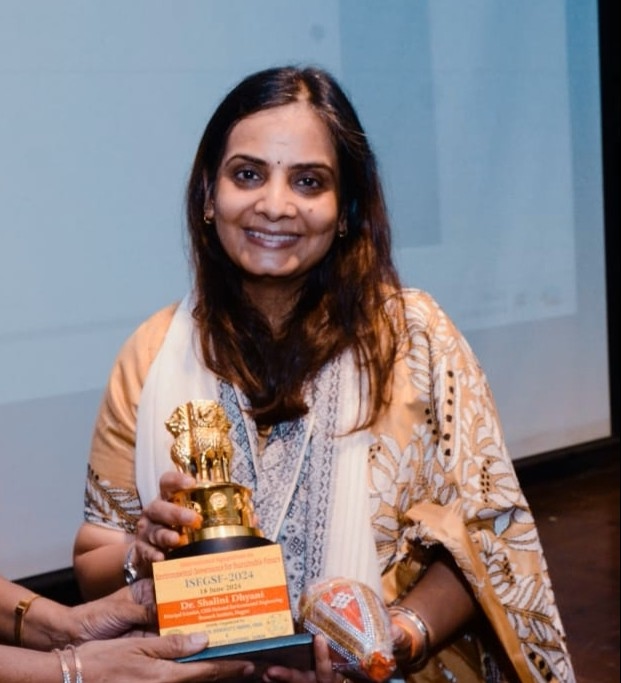
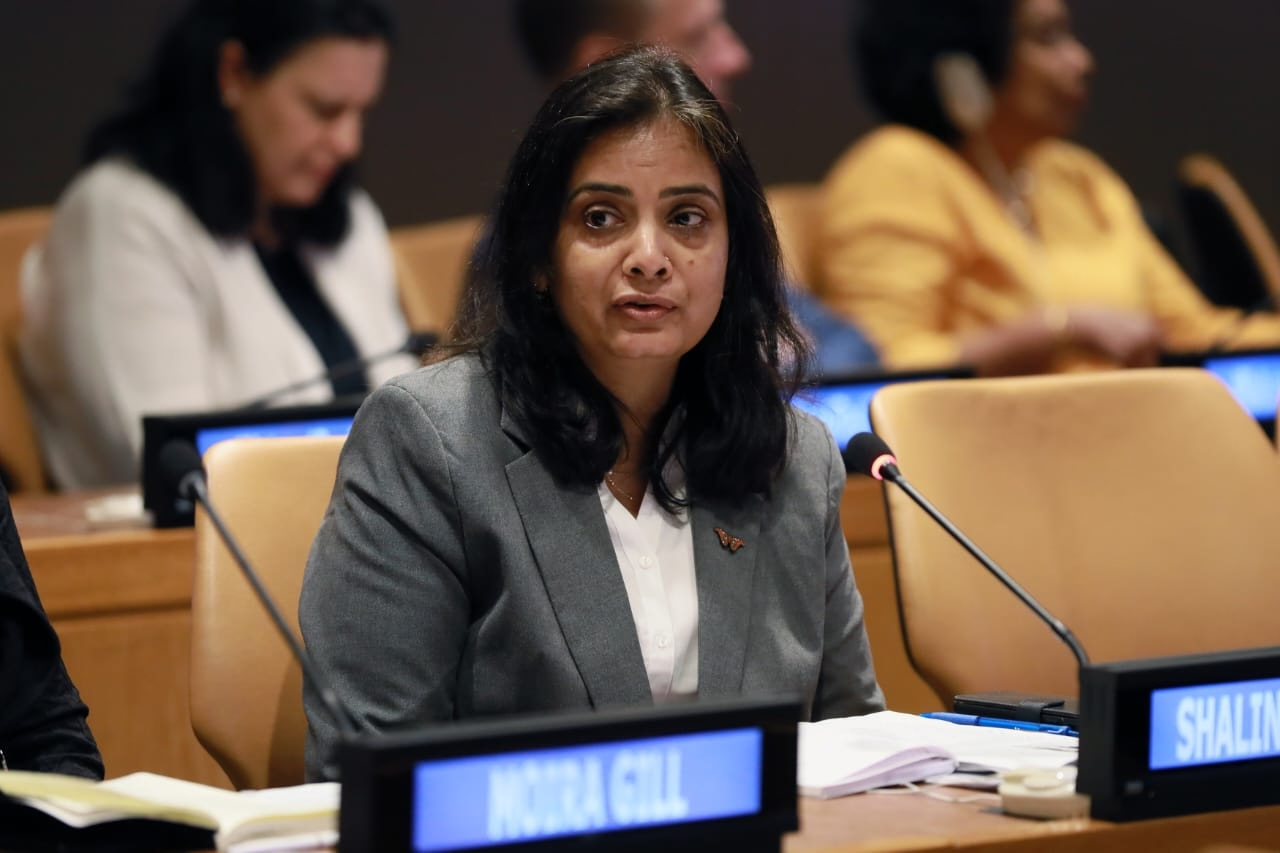
Shalini works on interlinkages between socio-ecological systems, following diverse knowledge systems and sustainability science approaches for ecosystem health assessments, and implementing Nature-based Solutions (NbS) for DRR and CCA. Her work has appeared in major international forums and she has been recognized as one of the top 100 women leaders in Asia for her exceptional work in environmental conservation.
Dr. Shalini Dhyani works at the interface of ecology, biodiversity, and climate adaptation, focusing on socio-ecological resilience. Her research integrates ecosystem science, traditional knowledge, and policy-relevant approaches to advance NbS for sustainable and equitable landscapes.
A central goal of her research is to translate scientific evidence into policy-relevant and scalable solutions, particularly through ecosystem health assessments, NbS, and restoration strategies. Her philosophy emphasizes science in service of society, promoting resilience, equity, and sustainability across landscapes.
EcoGenesis Lab Mission
Dr. Shalini Dhyani's research philosophy aligns with advancing biodiversity-led, climate-resilient futures through integrated socio-ecological science. Her work emphasizes ecosystem health, NbS, and inclusive knowledge systems to inform policy, strengthen resilience, and support sustainable development across forest, mountain, coastal, and urban landscapes.
Biography
Dr. Shalini Dhyani's academic journey began with a B.Sc. in Botany,
Zoology, and Chemistry from the University of Allahabad in 2001,
followed by an M.Sc. in Botany specializing in Cytogenetics from the
same university in 2003, where she scored first division. She then
pursued a Post Graduate Diploma in Biodiversity Conservation from
Forest Research Institute University, Dehradun, in 2004, earning a
gold medal, which marked her early immersion in ecological studies
through projects like surveys of medicinal herbs and invasive
species in the Himalayan and Karnataka regions. Her Ph.D. in
Forestry from Forest Research Institute University in 2010 focused
on the impact of natural and man-made disturbances on vegetation
structure and diversity in the Guptakashi Range of Kedarnath Forest
Division, Uttarakhand, under the supervision of Dr. R.K. Maikhuri
and Dr. U.M. Chandrashekara.
Dhyani's realization that ecosystem functioning, particularly in
Himalayan, coastal, desert, and urban forests, would define her
domain emerged during her research fellowships starting in 2004 at
G.B. Pant Institute of Himalayan Environment and Development, where
she investigated tropical soil biodiversity, forest dependency, and
women's drudgery in resource collection.
This hands-on
experience in field-based studies of disturbances, fodder banks, and
community conservation, coupled with certifications like
Participatory Forest Management (IGNOU, 2006) and training in
climate vulnerability (CEU Hungary, 2010), solidified her passion
for interdisciplinary work linking biodiversity, climate adaptation,
and disaster risk reduction.
Research Philosophy
Dr. Shalini Dhyani's research philosophy is rooted in the belief that ecological integrity and human well-being are inseparable. Her work focuses on understanding how biodiversity, forest ecosystems, and ecosystem services interact with climate variability, development pressures, and social systems. She adopts an interdisciplinary and transdisciplinary approach, combining ecological science with traditional and indigenous knowledge, participatory methods, and data-driven tools. A central goal of her research is to translate scientific evidence into policy-relevant and scalable solutions, particularly through ecosystem health assessments, NbS, and restoration strategies. Her philosophy emphasizes science in service of society, promoting resilience, equity, and sustainability across landscapes.
Education & Training
- 2021 - Post Graduate Diploma in Environmental Law | National Law School of India University
- 2021 & 2009 - IPROMO Program on Sustainable Mountain Management | University of Torino, Italy
- 2010 - Certificate in Ecosystem Vulnerability to Climate Change | Central European University, Hungary
- 2010 - Ph.D. in Forestry | Forest Research Institute University, India
- 2004 - Post Graduate Diploma in Biodiversity Conservation | Forest Research Institute University, India
- 2003 - M.Sc. in Botany Specialization Cytogenetics | University of Allahabad, India
- 2001 - B.Sc. in Biology | University of Allahabad, India